Floors That Handle Heavy Equipment Daily
Industrial Floor Coatings in Bozeman for facilities with chemical exposure and constant traffic
Aries Resin and Construction applies industrial-grade epoxy and resin coatings for commercial and industrial facilities across Bozeman and Gallatin County. You need this level of flooring when your space faces chemical spills, forklift traffic, or manufacturing processes that would destroy standard concrete in months. The multi-coat systems used here exceed residential standards because facilities require surfaces that remain intact under conditions most floors never encounter.
Industrial coatings involve full subfloor assessment before any material goes down, addressing moisture issues and structural problems that would cause expensive failures once heavy use begins. The minimum three-coat epoxy system includes chemical-resistant layers designed specifically for spaces where hydraulic fluid, solvents, or cleaning agents contact the floor daily. Bozeman's industrial spaces require temperature and moisture-control systems during cure, and wintertime installation remains possible with proper environmental management rather than waiting months for warmer weather.
Schedule a facility assessment to identify subfloor conditions and chemical exposure patterns specific to your operation.
What Subfloor Preparation Determines for Industrial Use
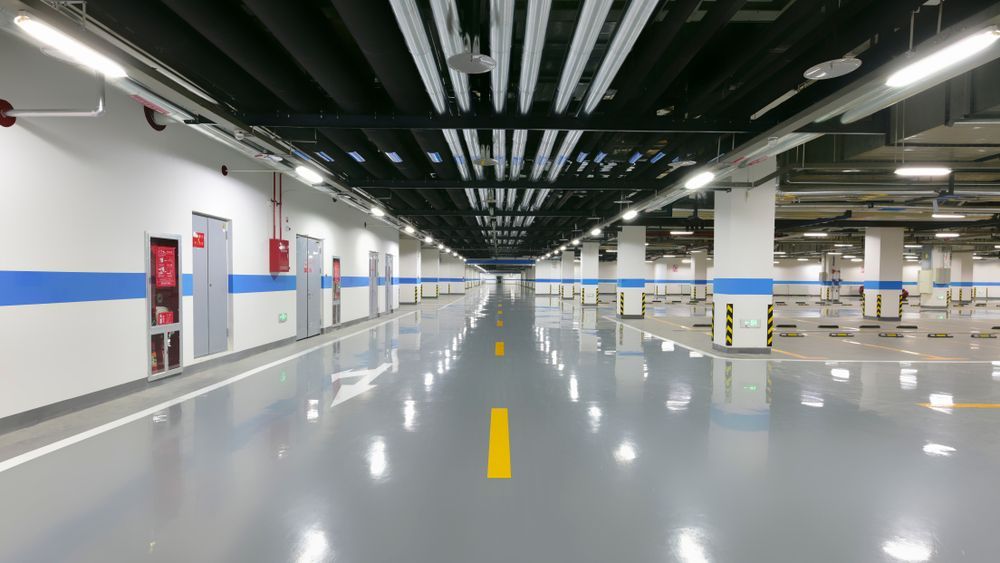
Subfloor preparation quality directly controls whether your coating system survives the first year of industrial traffic or delaminates in sections under load. The assessment identifies concrete moisture levels, existing cracks that will telegraph through any coating, and contamination from previous use that prevents proper adhesion. Spike shoes remain on throughout the application because walking on partially cured industrial coatings creates permanent impressions that compromise the finished surface.
Once the system cures fully, you'll notice that chemical spills wipe clean without staining the concrete beneath, forklift tires no longer leave black marks that require constant scrubbing, and the floor maintains a consistent appearance across high-traffic lanes instead of wearing through to bare concrete in paths. Aries Resin and Construction completed professional certification training that included industrial applications, focusing on the subfloor prep and multi-coat techniques required for environments where coating failure creates operational shutdowns.
The cure timeline depends on your space size and environmental conditions rather than a fixed schedule, because rushing industrial coatings to meet arbitrary deadlines produces surfaces that fail under the exact conditions you installed them to withstand. Systems designed for heavy traffic require additional cure time between coats compared to residential applications, and temperature management during winter installations extends timelines but produces results identical to summer work.
Questions About Industrial Floor Systems
Facility managers often ask about durability requirements and installation logistics before committing to coating projects that affect production schedules.
What makes industrial coatings different from commercial or residential epoxy?
Industrial systems use minimum three-coat applications with chemical-resistant formulations designed for constant heavy equipment traffic, whereas residential coatings prioritize appearance over the durability required when forklifts and pallet jacks operate daily across the same surface.
How does winter installation work for large facilities in Bozeman?
Concrete blankets or temporary climate control systems maintain the temperature and moisture conditions required for proper cure, allowing installation to proceed during cold months without compromising the chemical resistance and adhesion that industrial use demands.
Why does subfloor assessment matter before coating concrete that looks fine?
Moisture trapped in concrete and existing contamination from oils or previous coatings prevent adhesion even when the surface appears clean, and identifying these conditions before application prevents the costly failure of having to remove and reinstall an entire floor system.
What chemical resistance should I expect from a properly installed industrial coating?
You can wipe away hydraulic fluid, solvents, and cleaning agents without staining or etching the surface, though extreme concentrations left for extended periods may still affect certain coating formulations depending on the specific chemicals your operation uses.
How long does installation take for a typical facility space?
Small industrial areas require three to five days, while large facilities may need one to two weeks depending on square footage and the number of coats required, with cure time between layers accounting for most of the project duration rather than the application itself.
Aries Resin and Construction uses specialized equipment throughout the process, including spike shoes that protect partially cured surfaces and tools designed for the multi-coat systems industrial spaces require. Request a detailed estimate based on your facility's square footage and specific chemical exposure conditions.